
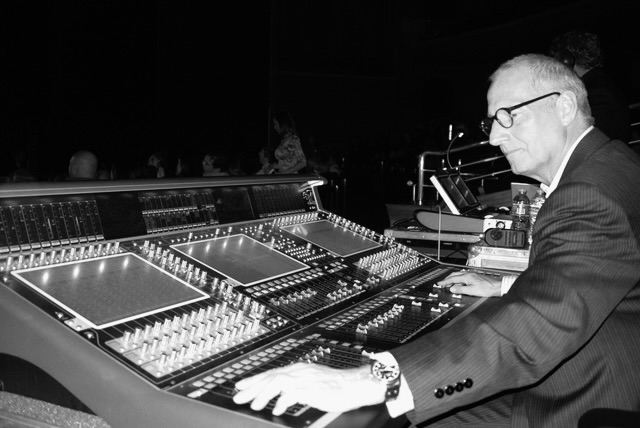
While many people think of Major Tom as a relatively new audio company, the reality is quite different. In truth, Major Tom had been taking shape long before it ever had a name. Although founding an audio company was never necessarily part of Lars Brogaard’s long-term plan, the path that led there was driven by passion, persistence, and a relentless pursuit of better sound.
With a career spanning more than four decades and collaborations with some of the biggest artists in the world, it would be impossible to fit every story into a single interview or article. So, the best place to begin is at the very start.
ABBA: The Tour No One Wanted
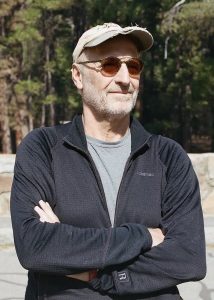
From a young age, Lars had a fascination with audio equipment. Working as a roadie for a friend’s band in Denmark sparked an early interest in live production, although the road into professional audio was far from straightforward.
Initially, Lars started a lighting company, supplying rigs for local bands and events. That eventually introduced him to ElectroSound, one of the UK’s major touring audio companies at the time.
“I sent a letter to them [ElectroSound] saying, ‘I would really like to come and get a job with them working in audio.’ They sent a letter back saying they were not in a position to take any new people on – end of story. Anyway, I sent another letter saying I was going to come to England anyway.”
In November 1977, Lars arrived in England with little more than determination. Sofa surfing in Huntingdon, he would take a bus, a train, and the Underground into London every day until ElectroSound finally gave him a chance.
Starting at the very bottom folding drapes and soldering cables, quickly working his way up. His first touring opportunity came in February 1978 as the third man on the PA crew for Rush. The following year, he got his first experience mixing monitors while touring with Rose Royce.
Then came the opportunity that would change everything.
“When ElectroSound got the contract for ABBA, I said, ‘If I don’t get to do ABBA, then I’m moving back to Denmark; this is a waste of my time.’ So they gave me the tour, but little did I know, no one else wanted to do it; everyone wanted to be on a Rock tour.”
This became the breakthrough Lars had been waiting for, touring across the UK, Europe, the United States, Canada, and Japan with ABBA opened the door to an international career.
After the tour, Lars remained in the United States, working with a variety of artists before landing his first FOH role with The Beach Boys, a moment he describes as a major turning point. Soon after came another career-defining opportunity.
“A little later on, I got my big break: FOH tech and crew chief on Lionel Richie.”
At first glance, the role may have seemed like a step back from mixing front of house, but only three weeks into the tour, the FOH engineer was fired and Lars stepped into the position himself. With Lionel Richie selling more than 20 million albums at the time, the tour became enormous, firmly establishing Lars as one of the industry’s leading engineers.
Building Something Better
While on the Lionel Richie tour, Lars began investing in his own specialised microphones, constantly pursuing better sound quality. In 1984, at the start of the Al Jarreau tour, he wanted to use a Lexicon 224 and an AMS RMX16 digital reverb. When the rental company was unable to provide them, they proposed a simple solution: he could buy the units himself and rent them back to the company.
It would be easy to say “the rest is history,” but in reality, this was only the beginning of Lars’s innovation within the audio industry.
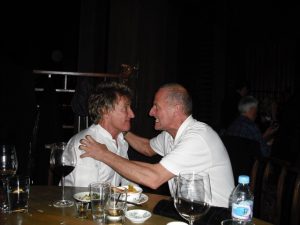
Never fully satisfied with the consoles available at the time, he began exploring the idea of building something better himself. The prototype console that he built and used on the Jefferson Airplane Reunion Tour inspired the design of the Midas XL3. This led to his involvement in the design and development of the legendary Midas XL4 console, before purchasing three of them for use on Rod Stewart tours.
The Digital Age
As digital technology began reshaping live sound, Lars once again found himself at the forefront of change.
Soundtracs had developed a platform they hoped could become a live digital console and asked Lars for his opinion.
“I spent 15 minutes touching buttons and screens; it was genius.”
However, a shift in direction within the company halted development. Rather than letting the concept disappear, Lars bought the prototype himself and secured investment to create what would eventually become DiGiCo, now regarded as one of the world’s leading live console manufacturers.
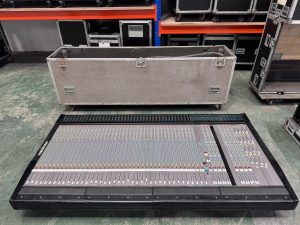
To this day, Major Tom still owns many of the consoles that shaped that journey: Lars’s own console, his original Midas XL3, all three XL4s, the very first DiGiCo D5, and a DiGiCo D1, all still housed in the warehouse.
Although no longer directly involved with DiGiCo, the relationship remains strong. A long-standing tradition of receiving the first console off the production line continues to this day, most recently with the delivery of the very first Quantum 112.
Collaborations and Colonel Tom Touring
Major Tom’s relationship with Meyer Sound began in the early 2000s after Lars was first introduced to the MILO system. Since then, the company has evolved into an exclusively Meyer Sound rental house; a partnership built on a shared commitment to achieving the highest possible sound quality.
Over the years, the collaboration has grown beyond simply using the systems, with Major Tom also contributing to the development of products such as the PANTHER large-format line array.
At the same time, Lars’s entrepreneurial instincts continued to expand beyond audio alone.
While working as production manager for Rod Stewart, he began sourcing quotes for video screens for an upcoming tour. At the time, there were very few suppliers, and most either had outdated equipment or were charging excessive prices. Once again, Lars arrived at the same conclusion he had reached many times before: if the right solution didn’t exist, build it yourself.
That decision led to the creation of Colonel Tom Touring in early 2009, extending the Major Tom philosophy into the world of video production.
A Reputation Built Over Decades
Today, Major Tom continues to operate at the very highest level of live touring and event production, supplying world-class audio systems for major international artists. What began as Lars buying a handful of pieces of outboard gear and microphones has grown into one of the industry’s most respected audio rental companies, built on a reputation for innovation, reliability, and uncompromising sound quality.
Despite the scale of the company today, the philosophy remains largely unchanged from those early touring days: invest in the best technology available, work with the best people possible, and never stop pushing for better results. From analogue consoles and pioneering digital systems to modern immersive audio and large-format line arrays, Major Tom has consistently positioned itself at the forefront of live sound production.
Colonel Tom Touring has followed a similar trajectory, becoming a leading supplier of touring video solutions with a reputation for delivering complex, large-scale productions around the world. Together, the two companies represent decades of experience across audio, video, and touring production, while still carrying the same entrepreneurial spirit that first brought Lars to England with little more than determination and a passion for live sound.